market_watch
Zimbabwe's capital markets get a seat at Africa's table
5 min read · Ndarama Editorial (AI-assisted)
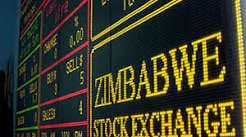
A Zimbabwean has been named vice president of the body linking Africa's stock exchanges. It raises Zimbabwe's profile, but it changes no rules
The real story is not a change to how Zimbabwe's markets work. It is that the person running three of the country's market venues now has a seat at the table where African exchanges decide how to connect with each other.
The numbers, plainly
Justin Bgoni, Group Chief Executive Officer of ZSE Holdings, has been appointed Vice President of the African Securities Exchanges Association (ASEA). The appointment is effective 2 October 2026 and was announced by ASEA on Monday 5 October 2026, according to Zimbabwean media reports.
He takes over a position previously held by Tarik Senhaji of the Casablanca Stock Exchange, who held it from July 2024. Pierre Celestin Rwabukumba of the Rwanda Stock Exchange is ASEA's President.
Bgoni's own remit is broad. He oversees the Zimbabwe Stock Exchange (ZSE), the Victoria Falls Stock Exchange (VFEX) and the Zimbabwe Entrepreneurship Exchange (ZEEX). He is also interim CEO of the Victoria Falls International Financial Centre.
Why it is happening: the mechanism
ASEA is a non-profit association of African securities exchanges, established in Nairobi in 1993. Its work covers developing member exchanges, harmonising cross-border investment frameworks, and promoting initiatives such as the African Exchanges Linkage Project (AELP).
Think of it as the committee of a regional sports league. The committee does not run any club's matches, set a club's finances or change a country's laws. But the people on it influence the fixtures, the shared rules and which clubs get noticed. The vice presidency is an executive-committee position of this kind. It is not a regulatory role.
That is why the appointment is better read as influence than authority. A seat on the committee helps shape the conversation about how exchanges link up, and it puts Zimbabwe's venues in front of the other members.
Why this matters
Zimbabwe has been trying to build capital markets that attract hard-currency money. The USD-denominated VFEX and the broader exchange group are the venues most directly tied to that effort. A senior regional role can raise their visibility as places where cross-border investors might look, and as a possible regional gateway.
It has also been framed locally as a vote of confidence in Zimbabwe's capital markets. That framing is a reasonable reading of the signal, but a vote of confidence from a peer association is different from capital arriving.
What this means for the common person
Nothing changes in your wallet or on your trading screen this week.
If you invest on the ZSE or VFEX: The appointment does not change the value of any share you hold, and it does not change how you buy or sell. Prices will keep responding to company results, currency conditions and demand.
If you are a saver or pension member: You do not need to act. The story is about the profile of the market, not about returns.
If you run a business thinking of raising money: Closer links between exchanges could, over time, make it easier for firms to be seen by investors beyond Zimbabwe. That depends on the cross-border frameworks ASEA's members actually agree on, and none have been announced here.
If you follow the economy: Treat this as a reputational signal. Dollar-denominated listings and regional linkages are part of how Zimbabwe tries to attract foreign currency, and this keeps that effort in the conversation.
Keep the scale in mind
This is a profile signal, not a policy change. The appointment does not alter Zimbabwe's legal framework, currency rules, capital controls or sanctions exposure. An investor weighing Zimbabwe still has to weigh those factors, and a title for a local executive does not remove them.
A vice presidency also does not guarantee outcomes. ASEA promotes linkage projects and harmonisation, but progress on those depends on many member exchanges and their regulators, and nothing in this announcement says a specific link or reform is coming.
On sourcing, the appointment has been reported by several Zimbabwean outlets, including The Herald, Positive Eye News and Insurance24. At the time of writing, the primary announcement had not been located on ASEA's own website. That does not suggest the report is wrong, but the original statement is the best place to confirm the details.
Closing takeaway
Zimbabwe now has a senior voice on a committee that helps decide how African stock exchanges connect, and that is good for the visibility of its markets. It does not change what any share is worth, who can buy it or what rules apply. The things to watch are what ASEA itself publishes about the appointment, and whether the linkage work it promotes produces concrete steps involving the ZSE and VFEX.