market_watch
Five SONA takeaways for the everyday Zimbabwean investor
5 min read · Ndarama Editorial (AI-assisted)
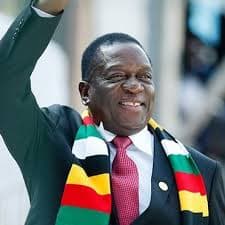
Five Things the State of the Nation Address Means for Your Money
President Mnangagwa's speech reported strong inflation and growth numbers, and pointed to two bills that could directly affect how investments are taxed and who can access formal finance. Here's what to take seriously, and what's still just a forecast.
The numbers, plainly
President Mnangagwa delivered the State of the Nation Address (SONA) on 29 September 2026 at Mount Hampden, opening the Fourth Session of the 10th Parliament. The figures below are the government's own reported numbers, not independently audited statistics — worth keeping in mind throughout, since they signal policy direction rather than confirmed fact.
1. Single-digit inflation, if it holds
Inflation has been reported at single-digit levels since January 2026. Lower inflation means the real value of investment returns isn't being eroded as fast. But this is the government's blended measure, and the disinflation path looks fragile — USD-denominated year-on-year inflation was still elevated in late 2025. Treat this as a welcome trend, not a settled fact.
2. Growth is agriculture-driven, with a real risk attached
GDP growth was reported at 8.3%, with agriculture growing 27.9% and contributing 2.2 percentage points to that total. The Reserve Bank of Zimbabwe's own 2025 Annual Report estimates growth closer to 8%, not 8.3% — the direction matters more than the exact decimal. A resilient agriculture sector supports consumption and productive assets, but the 2026/27 season carries explicit drought risk from expected below-normal rainfall, which could hit agriculture-linked assets and food-price stability directly.
3. Strong forex inflows, but the year-end number is a forecast
Foreign currency inflows reached US$10.7 billion in the first half of 2026, with the President projecting about US$20 billion by year-end. Strong inflows can support currency and price stability, which reduces how quickly real returns get eaten by depreciation. But US$20 billion is a projection, not an actual outcome, and projections can miss.
4. A Finance Bill that could change investment tax treatment
Government says a Finance Bill aimed at modernising revenue-mobilisation laws will come before Parliament this session. This matters directly for investors: it could alter tax treatment, VAT, capital gains, and compliance obligations for investment structures, potentially including how tokenised instruments and their underlying real assets are taxed. Until the Bill is published, the direction is clear but the actual impact isn't.
5. An SME Bill that could widen the pool of investable businesses
Government plans to introduce a Small and Medium Enterprises Amendment Bill to strengthen MSMEs, support formalisation, and improve access to finance and markets. If the formalisation push works, it could widen the pool of formal, investable small businesses and make it easier for them to raise and manage capital. This is a structural shift to watch over time, not an overnight opportunity.
Why this matters
Two of these five points aren't just economic backdrop — they're direct, near-term policy signals. The Finance Bill and the SME Bill could each change practical details of how investing works in Zimbabwe: what gets taxed and how, and who counts as a formal, financeable business. Both are worth tracking specifically once draft text is published, rather than reacting to the SONA mention alone.
What does this mean for the common person
If you hold ZiG savings or investments: single-digit inflation, if it holds, supports the real value of what you hold. The RBZ's own growth estimate running slightly below the government's figure is a reminder to watch the trend over several data points, not one announcement.
If you work in or depend on agriculture: the 27.9% growth figure is genuinely strong, but the explicit drought risk flagged for the 2026/27 season is the thing to watch next, not the growth number itself.
If you run or work for a small or medium business: the planned SME Amendment Bill is worth following closely — formalisation support and easier access to finance could be meaningful if it delivers, though "planned" isn't "passed."
If you have any investment structure, tokenised or otherwise: the Finance Bill is the one item on this list with a direct line to your tax obligations. Nothing changes until it's published and passed, but it's worth reading closely when it appears rather than after the fact.
For everyone: the SONA is a policy roadmap, not a scorecard. It tells you where government intends to steer things, not what has already been delivered.
Keep the scale in mind
These claims are contested — opposition parties have challenged the economic picture presented, and Zimbabwe's macro stability has historically proven fragile. Real structural pressures remain in the background regardless of this speech: high external debt, heavy US-dollar transaction dominance, and unresolved debt or sanctions issues all limit how durable the reported stability may prove to be.
Closing takeaway
The honest way to read this SONA is as a direction of travel, not a set of confirmed results. Inflation and growth trends are worth watching for whether they hold over the coming months, and the Finance Bill deserves a careful read the moment it's published, since it's the one item here with a direct and near-term effect on how investments are taxed.
This article is for information only and is not investment advice.