market_watch
A US delegation to Harare is "expected." Here is what is confirmed, and why the direction of travel matters
5 min read · Ndarama Editorial (AI-assisted)
A US delegation to Harare is "expected." Here is what is confirmed, and why the direction of travel matters
The real story is not one visit. It is that several separate threads (sanctions, trade, minerals and regional politics) are pointing the same way at the same time.
The numbers, plainly
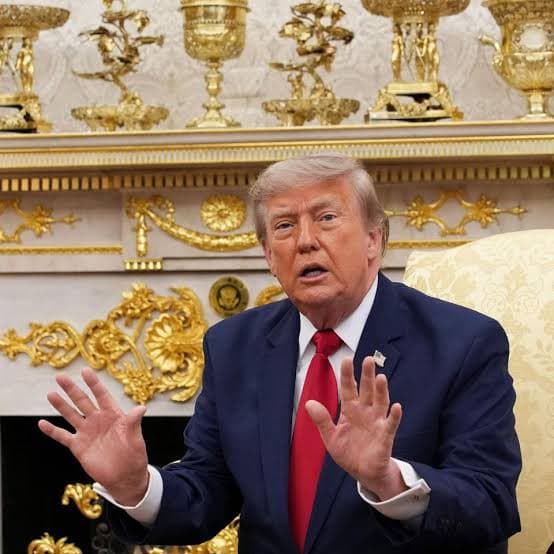
The Herald, Zimbabwe's national daily, reported this week that US President Donald Trump is expected to send a congressional-and-business delegation to Harare to meet President Mnangagwa. The report attributes the news to ZANU-PF spokesperson Ambassador Chris Mutsvangwa and Foreign Affairs Permanent Secretary Albert Chimbindi. It follows a meeting on the sidelines of the UN General Assembly between Mnangagwa and Republican Congressman Marlin Stutzman of Indiana.
"Expected" is the operative word. No date, participant list or US government confirmation has been published yet.
One concrete trade item sits alongside the diplomacy. Zimbabwe has a US sugar tariff-rate quota. US Department of Agriculture records show an allocation of 12,910 metric tonnes for the US 2026 fiscal year, announced in August 2025 and fully used by November 2025. The local report cites a much smaller 813 tonnes for the 2027 tranche.
Why it is happening: the mechanism
A tariff-rate quota works like a lane at a border post. A fixed volume of sugar can enter the US at a lower tariff, and anything beyond that volume pays the higher rate. The lane is cheaper, not free, so "duty-free access" overstates it. And once the lane is full, as it was by November 2025, the benefit stops until the next allocation.
ZDERA, the 2001 US law, works differently. Think of a guarantor who has agreed to refuse his signature whenever you apply for a loan. The law directs the US to oppose or withhold support for Zimbabwe at institutions like the IMF and World Bank until reforms are met. Lenders notice that refusal even when no rule forces them to follow it.
On ZDERA, the House Foreign Affairs Committee voted in September 2025, as part of a larger State Department bill, for a provision to end the Act. The provision does not scrap it outright. It sets conditions before US support for new or expanded IMF or World Bank funding, including, according to one report, settling arrears owed under the Global Compensation Deed. That is the land-compensation issue. President Mnangagwa's spokesman George Charamba called it a "major development".
Congress takes first step towards ending last Zimbabwe restrictions +3
Separately, the targeted US sanctions on Zimbabwean individuals and companies have been narrowed over time, with many names removed. What remains are measures under the Global Magnitsky framework, which targets named individuals rather than the whole economy.
There is also a geopolitical reading. Analysts point to strained relations between Washington and Pretoria, and to Washington's interest in offering alternatives to Chinese influence over minerals in the region. Zimbabwe holds lithium, gold and platinum-group metals. These are analysts' interpretations, not stated US policy.
Why this matters
Zimbabwe's biggest economic constraint is not a lack of resources. It is the cost and availability of finance. When a country is seen as a hard place to lend to, banks and funds charge more or stay away. Anything that eases that perception can, over time, narrow the premium on borrowing, trade finance and investment.
That ties back to the ZiG. A currency is held up partly by forex coming in, from exports, remittances, investment and lending. More foreign inflows ease pressure on the reserves that stand behind the currency. The link is indirect and slow, but it is real.
What this means for the common person
Nothing changes at the till this week, and anyone saying otherwise is overselling it.
The nearest effects are in specific places. Sugar growers and millers in the Lowveld are the most direct case, though the quota is small and was already used up once. Mining towns could see more interest if US investors do arrive, which would show up as jobs and supplier contracts rather than prices in the shop.
If financing ever did open up, the effects would arrive slowly. Importers might get cheaper trade lines, which over time can mean steadier supplies of things like cooking oil, fuel and fertiliser. Households might notice it as less volatility in prices rather than falling prices. That is a years-long process and depends on what Zimbabwe does next, not only on Washington.
Keep the scale in mind
The delegation is expected, not confirmed. Diplomatic announcements often slip, shrink or change shape.
ZDERA is not gone. The version advanced in committee comes with conditions, including the land-compensation arrears. Settling those would be a large financial and political task, and the process still needs to clear the full Congress.
The sugar quota is small. Even the larger 12,910-tonne allocation was fully used within months.
The Global Magnitsky measures remain in place for the individuals they cover. And the risks investors weigh, such as governance, property rights, foreign exchange availability and currency stability, are the same ones as before. A warmer diplomatic tone does not resolve them.
Geopolitics cuts both ways. Interest from Washington partly reflects competition with other powers, and that kind of interest can fade if priorities shift.
Closing takeaway
The honest read is that several threads are pointing in the same direction, but none has yet become a signed deal, a repealed law or a delegation on the ground. This week's story is a reason to keep watching, particularly for a date and a named delegation, any movement on ZDERA in Congress, and whether the minerals interest turns into actual investment.